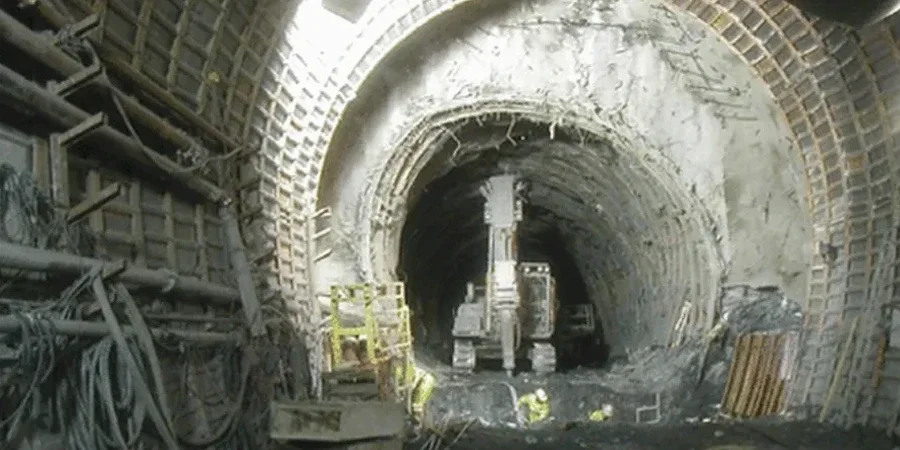
Driving a tunnel through downtown Rochester isn't like boring through the bedrock of the Adirondacks. The city sits on a deep sequence of glacial Lake Iroquois sediments—silts and soft clays that can deform under even moderate stress. We've seen projects near the Genesee River where contractors hit saturated lenses just 12 feet down, and the tunnel face started squeezing before the shield could advance. With an average annual precipitation of 34 inches and a water table that often sits within 10 feet of the surface in the floodplain, any underground work here demands a geotechnical framework that goes beyond standard site investigation. A proper soft-ground tunnel analysis integrates pore pressure modeling, stand-up time predictions, and settlement trough estimates tailored to the city's unique post-glacial stratigraphy.
In Rochester's post-glacial clays, the difference between a stable tunnel face and a running ground condition often comes down to understanding the soil's stress history, not just its strength.
Our approach and scope
Rochester's downtown elevation hovers around 500 feet above sea level, but the subsurface profile tells a more complex story. Underneath the historic High Falls district, we've logged over 60 feet of varved clay—rhythmic layers of silt and lean clay deposited seasonally in glacial Lake Iroquois roughly 12,000 years ago. This formation has undrained shear strengths that can drop below 500 psf in disturbed zones. Tunnel alignment through these soils requires careful characterization of the clay's sensitivity and its potential for remolding during excavation. Our analysis typically includes a suite of ASTM D2487 classification tests on continuous Shelby tube samples, coupled with consolidated-undrained triaxial tests to define the effective stress parameters. We pay particular attention to the preconsolidation pressure; much of the upper clay in the Genesee corridor is lightly overconsolidated, which means the factor of safety against basal heave can shift dramatically with just a few feet of additional cover.
Questions and answers
What is the typical cost range for a geotechnical analysis of a soft soil tunnel in Rochester?
Depending on the length of the alignment and the number of boreholes required, a comprehensive soft soil tunnel analysis in Rochester typically ranges from US$4,610 to US$16,670. This includes field investigation, laboratory testing on undisturbed samples, and the engineering report with face stability and settlement predictions.
How do glacial lake clays affect tunnel boring machine selection in this region?
Rochester's varved clays are highly sensitive and have low permeability, which means an Earth Pressure Balance (EPB) machine is usually preferred. The thixotropic nature of the clay allows it to form a good paste in the screw conveyor, but the machine's torque and thrust must be sized to handle the sticky, plastic material without clogging.
What laboratory tests are most critical for tunnels in these soft soils?
Beyond basic classification per ASTM D2487, we consider consolidated-undrained triaxial tests with pore pressure measurement essential. Oedometer tests to determine the preconsolidation pressure and the compression index are also critical for settlement analysis, along with Atterberg limits to assess the clay's plasticity and potential for squeezing behavior.