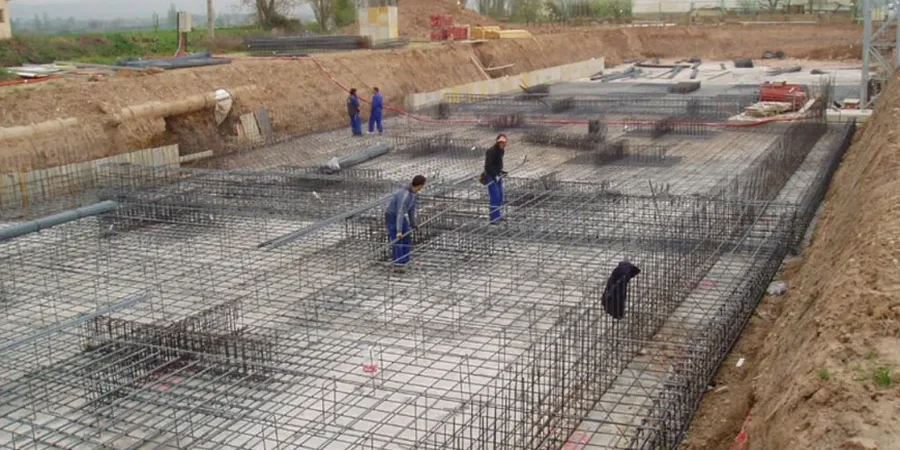
Rochester's building code mandates geotechnical investigation per IBC Chapter 18 for any new structure, and for good reason. The city sits atop a complex mix of glacial till, lacustrine silts, and occasional organic lenses left by the retreat of the last ice sheet. Getting the shallow foundation design wrong here means differential settlement that shows up fast—cracked drywall, sticking doors, and a structural headache no owner wants. Our lab runs the soil mechanics program that feeds directly into the bearing capacity calculations your structural engineer needs. We test the samples, classify the strata per ASTM D2487, and deliver parameters for strip footings, spread footings, and mat foundations. The process ties directly to ASCE 7 load combinations and Rochester's frost depth requirement of 42 inches—a number that shapes every excavation in Monroe County.
A Rochester footing placed above frost depth will heave. A footing placed on unconsolidated silt will settle. The fix for both starts in the lab, not on the jobsite.
Local ground factors
Rochester's development history left a legacy of urban fill in neighborhoods like the South Wedge, Corn Hill, and pockets along the old Erie Canal alignment. Before the 1950s, demolition debris, ash, and miscellaneous fill were routinely dumped in low-lying areas and covered with a thin cap of soil. A shallow foundation built over undocumented fill is a textbook case for catastrophic differential settlement. We have seen slabs crack within two years on sites where the bearing stratum was assumed competent but turned out to be 8 feet of loose cinder and brick fragments. The solution is not to avoid these neighborhoods—it is to drill through the fill and bear on the natural till or bedrock below. That means deeper footings, possibly a grade beam system, and always a thorough boring program. Skipping the subsurface exploration because the lot looks flat is the costliest shortcut a developer can take in this city.
Questions and answers
What is the typical bearing capacity of soil in Rochester?
In Rochester, dense glacial till typically yields allowable bearing pressures between 2,500 and 4,000 psf, while the lacustrine silts and clays found in lower-lying areas range from 1,200 to 2,000 psf. These numbers depend on the depth of the bearing stratum, the water table position at the time of investigation, and the footing embedment depth. We determine site-specific values through SPT N-value correlations and laboratory shear strength testing, never from a table alone.
How much does a shallow foundation geotechnical investigation cost in Rochester?
For a typical single-family lot or small commercial parcel in Rochester, the geotechnical investigation and bearing capacity report ranges from US$1,630 to US$2,740. The final cost depends on the number of borings required, the depth to bearing stratum, and the laboratory testing program. Sites with deep fill or soft alluvial soils that require consolidation testing will fall toward the upper end of that range.