← Home · Roadway

Rigid Pavement Design in Rochester: Addressing Freeze-Thaw and Industrial Loading on the Genesee

Together, we solve the challenges of tomorrow.

LEARN MORE →

Rochester sits in a unique position where Great Lakes weather slams into the Genesee Valley, creating one of the most aggressive freeze-thaw environments in the Northeast. We see over 100 freeze-thaw cycles annually, and the underlying glacial till and lacustrine silts of the former Glacial Lake Iroquois don't drain easily. That combination is brutal on concrete. A rigid pavement design here cannot be a copy-paste from a manual—it has to account for saturated subgrade that heaves in January and turns to soup in March. Our team integrates the in-situ permeability data from the site to model how water moves beneath the slab, because trapped moisture is what triggers faulting and corner breaks. For heavy loading at the Port of Rochester or the intermodal yards near the CSX Goodman Street Yard, a poorly drained base layer will fail within three winters regardless of the concrete strength.

In Rochester, the design life of a rigid pavement is defined by what happens below the slab in March, not by the concrete compressive strength in the lab.

Our approach and scope

A recent project involved a distribution center on a redeveloped brownfield off Lyell Avenue. The original design called for a standard 9-inch doweled slab on dense-graded aggregate. The problem was the underlying varved clay—a classic Rochester formation with thin, alternating layers of silt and clay that hold perched water. We ran the MEPDG analysis with local climatic data from the Frederick Douglass Greater Rochester International Airport weather station and found the predicted faulting exceeded 0.12 inches by year 15. Instead, we specified a 10.5-inch continuously reinforced concrete pavement (CRCP) over a 6-inch cement-treated permeable base, tying the edge drains into the existing municipal storm system. This is the kind of decision that comes from understanding the city's stratigraphy, not just the spec book. The plate load test results on the treated subgrade gave us a modulus of subgrade reaction (k-value) of 420 pci, which allowed us to optimize the slab thickness without over-engineering the section.
Rigid Pavement Design in Rochester: Addressing Freeze-Thaw and Industrial Loading on the Genesee
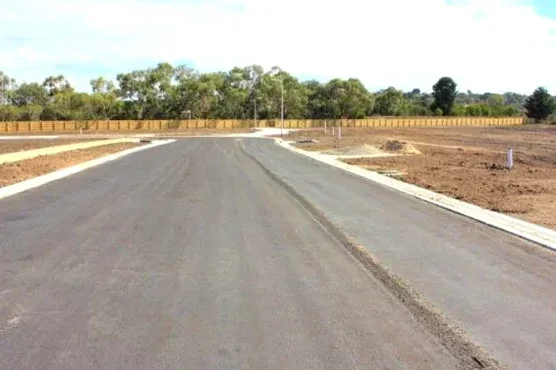
Technical reference image — Rochester

Local ground factors

The single biggest mistake we see in Rochester is ignoring the effect of saturated fine-grained subgrade on pumping. A contractor will place a beautifully finished slab in September, and by April there's a 3-millimeter void under the transverse joints with water and fines oozing out at every truck pass. That's not a curing problem—it's a drainage and gradation failure. Without a proper open-graded base and edge drain system, the hydraulic pressure from freeze-thaw cycling literally pumps the subgrade soil out from under the pavement. For sites near the Genesee River or Irondequoit Creek where the water table is within 4 feet of the surface, we've seen slabs lose 60% of their support in under five years. The repair involves full-depth patching and often a complete underdrain retrofit, costing three times the value of getting the rigid pavement design right the first time.

Need a geotechnical assessment?

Reply within 24h.

Email: info@geotechnicalengineering1.sbs

Technical data

ParameterTypical value
AASHTO Design ProcedureAASHTO 1993 & MEPDG (AASHTOWare)
Joint Spacing (Jointed Plain)15 ft (4.5 m) for standard slabs
Typical Local k-Value (Treated)350–450 pci on cement-treated base
Freeze-Thaw DurabilityASTM C666 Method A, DF > 85%
Dowels (Jointed Pavement)1.25-inch epoxy-coated, spaced 12 inches
Load Transfer Efficiency (LTE)> 85% at mid-slab (AASHTO T 253)
Design Traffic ESALsSite-specific, typically 5M–30M for industrial

Associated technical services

01

Industrial Rigid Pavement Design

CRCP and jointed plain concrete pavements for warehouse floors, intermodal yards, and manufacturing plants. We analyze point loads from rack systems and forklift traffic, incorporating the high-cycle fatigue effects typical of 24/7 operations in the Rochester area.

02

Concrete Mix Design & Durability Testing

Freeze-thaw resistance per ASTM C666 with local aggregate sources from the Onondaga Escarpment. We specify air-void systems for a spacing factor below 0.008 inches to survive prolonged winter exposure without scaling.

03

Pavement Subsurface Drainage Design

Design of permeable bases, geotextile separation layers, and edge drain networks to manage the perched water common in the glaciolacustrine deposits south of Ridge Road. We model the time-to-drain to keep the base layer below 85% saturation.

Reference standards

AASHTO Guide for Design of Pavement Structures (1993), AASHTO MEPDG (Mechanistic-Empirical Pavement Design Guide), ASTM C1435 / C1435M – Maturity Method for Concrete, IBC Chapter 18 – Soils and Foundations (New York State Edition), NYSDOT Standard Specifications – Section 500 (Rigid Pavement)

Questions and answers

How do Rochester's freeze-thaw cycles affect rigid pavement joint design?

The key is to manage the curling stresses from the negative temperature gradient in winter. We typically tighten joint spacing to 12–15 feet for jointed plain concrete and specify a widened base course to accommodate the frozen subgrade's increased stiffness. Dowel placement is critical—misaligned dowels lock the joint and cause spalling in the first season. In Rochester's climate, we also recommend a 2-foot-wide geotextile strip under each transverse joint to prevent pumping.

What is the typical cost range for a rigid pavement design for an industrial facility in Rochester?

Depending on the scope—a new 50,000-square-foot warehouse with jointed plain concrete versus a CRCP intermodal yard—the engineering design and material specification typically falls between US$2,160 and US$7,220. This includes the site investigation, MEPDG analysis, mix design review, and construction support. A forensic evaluation of a failed pavement on an existing site may sit at the lower end of that range.

Do you use the AASHTO 1993 method or MEPDG for Rochester pavements?

We use both, but MEPDG is the standard for any project with complex loading or climate sensitivity. The 1993 guide is useful for initial thickness estimation on simple roadways. For industrial slabs with heavy channelized traffic and Rochester's precipitation data integrated into the Enhanced Integrated Climatic Model, MEPDG gives us a much more accurate prediction of faulting and transverse cracking over a 30-year design life.
Location and service area

We serve projects in Rochester and surrounding areas.

View larger map