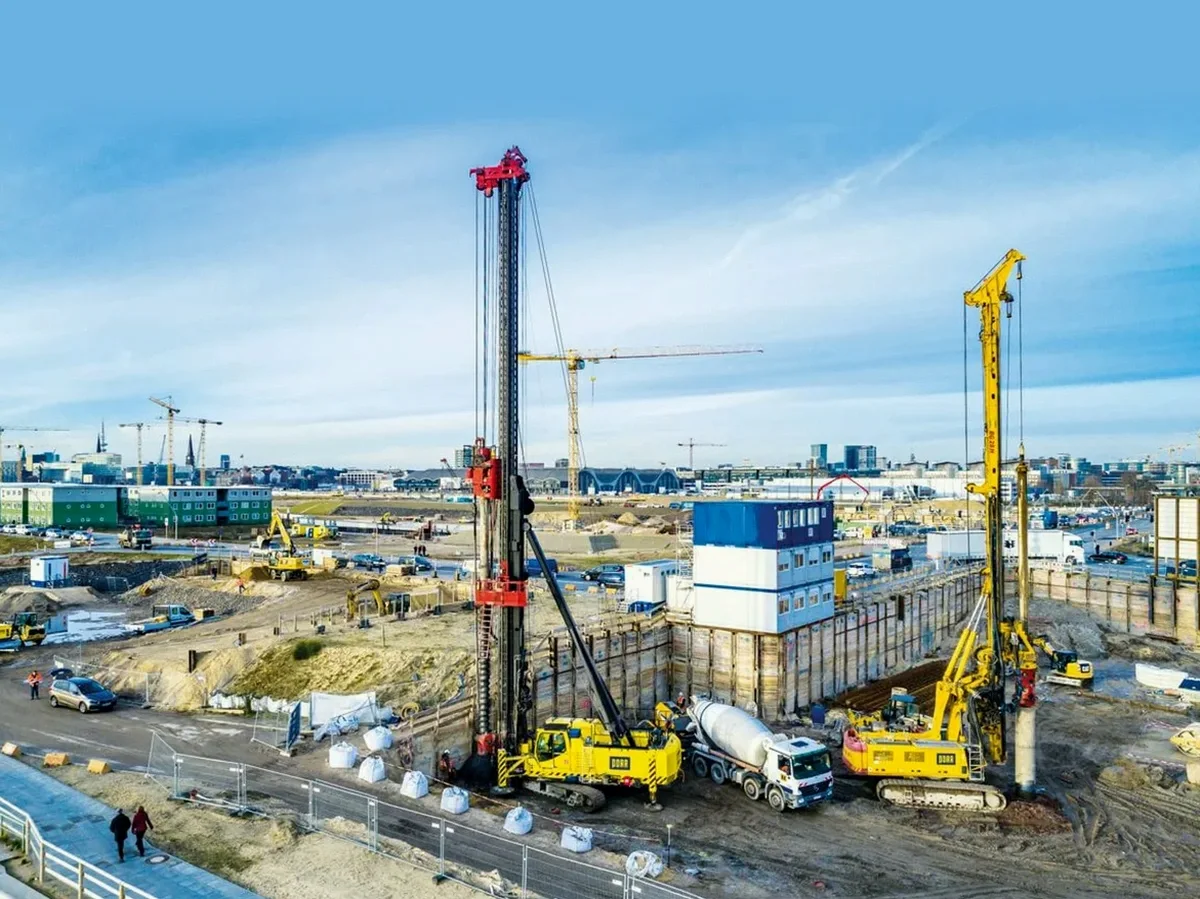
With a population of over 210,000, Rochester sits at the edge of an ancient glacial basin where the soil profile changes drastically within half a mile. Bedrock here is rarely uniform. The Lockport dolomite lies deep in some areas and surfaces in others, while thick layers of glacial till and sensitive post-glacial clays dominate the subsurface. Our pile foundation design work starts with that reality. A standard shallow footing might work in a few spots near the river, but push half a mile south toward the drumlin fields and you are looking at 40 to 60 feet of compressible material before hitting anything competent. For the past decade, our team has been correlating local borehole data with load test results across Monroe County, building a database that lets us model pile behavior before the first rig arrives. We combine that local knowledge with in-situ permeability testing when groundwater complicates the shaft, and we often specify a triaxial program on undisturbed samples to nail down the undrained shear strength of the native clay. Every pile design we deliver accounts for freeze-thaw cycles that Rochester sees from November through March.
Rochester's glacial stratigraphy can shift from dense till to sensitive clay within 100 feet laterally, making pile design a site-specific exercise every single time.
Local ground factors
The most common mistake we see in Rochester is contractors treating the top of glacial till as a suitable bearing layer for end-bearing piles without verifying the thickness of the weathered crust. That crust can be 3 to 5 feet thick, underlain by dense material that looks identical on a split spoon but behaves completely differently under load. A pile tipped in the crust settles abruptly once the crust compresses, even if the blow counts looked great. Another recurring problem is underestimating downdrag in the varved clays south of the city. When fill is placed or the water table drops, those clays consolidate and grip the pile shaft, transferring load downward and overloading the toe. Our pile foundation design explicitly models downdrag using the neutral plane method, and we specify bitumen coating or oversized casings where the soil profile demands it.
Questions and answers
What does pile foundation design cost for a typical commercial site in Rochester?
For a standard commercial lot in the Rochester area, pile foundation design fees range from $1,930 to $6,610. The spread depends on the number of borings, the complexity of the glacial stratigraphy, and whether dynamic testing or lateral load analysis is required. A small retail pad with uniform till will be on the lower end; a multi-story building near the river with varved clays and a high water table will run higher.
Which pile type works best in Rochester's glacial till?
Driven H-piles perform well in the dense glacial till found across much of Monroe County. The till provides excellent shaft friction once the pile is driven past the weathered crust. In areas with cobbles and boulders, we often specify drilled shafts with temporary casing to avoid refusal issues. Micropiles work well for retrofit projects with limited headroom.
How deep do piles need to go in Rochester to reach competent bedrock?
It varies significantly. Downtown and along the Genesee River, bedrock typically sits 30 to 60 feet below grade. In the southern drumlin fields, soft clays can extend deeper. We never estimate depth without a boring log. The top of bedrock can be highly weathered, so we look for unweathered dolomite or shale with an RQD above 50% as the bearing stratum.
Is frost heave a concern for pile foundations in Rochester?
Yes. With a design frost depth of 48 inches per IBC, the upper portion of a pile can be exposed to adfreeze forces if the surrounding soil is frost-susceptible. We address this by specifying a permanent casing through the frost zone, or by isolating the pile cap from the surrounding ground with a compressible layer. Silty soils, common around Irondequoit, are the most frost-active.